


Building a VR Maintenance Training Simulator for Cessna Aircraft
When we were asked to build a VR maintenance simulator for the Cessna, the goal was clear: create a training tool that reduced dependence on access to a physical aircraft.
From the start, we saw a chance to go beyond a simple procedural walkthrough. We wanted the experience to feel modern, interactive, and more engaging than traditional training software. That led us to focus on two key features: hand tracking and an open, sandbox environment.
The Challenge
Aviation maintenance training is highly procedural, but most digital learning tools rely on rigid interaction models: menus, prompts, videos, and linear step-by-step instructions. VR simulations can fall into the same pattern. Many recreate processes visually, but still rely on controller inputs and linear sequences. Technically functional, but often disconnected from how people naturally interact with the world around them.
We believed giving users more direct interaction, combined with an open environment, could create a deeper sense of involvement and engagement during training.
Our Approach
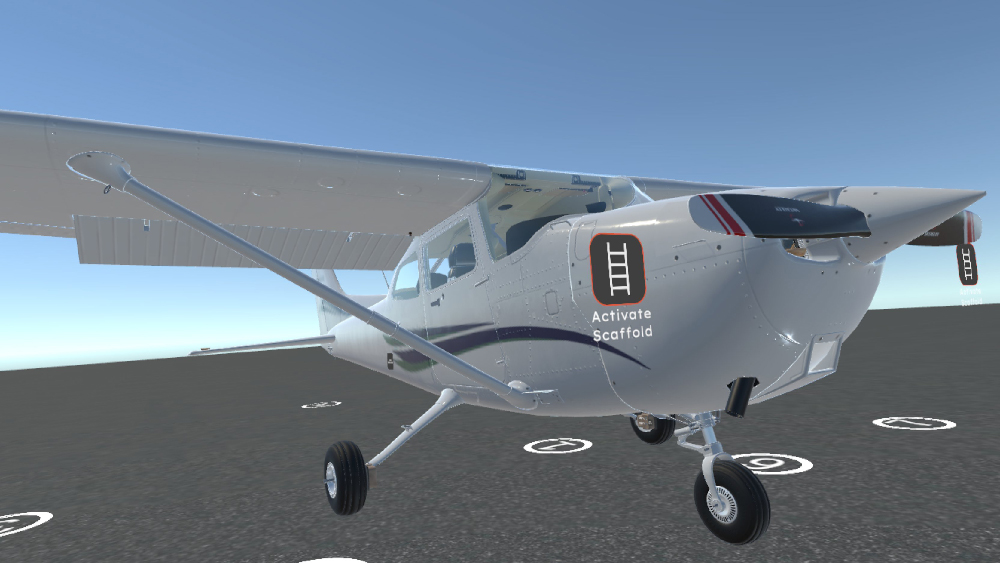
We built the simulator around hand tracking instead of traditional VR controllers.
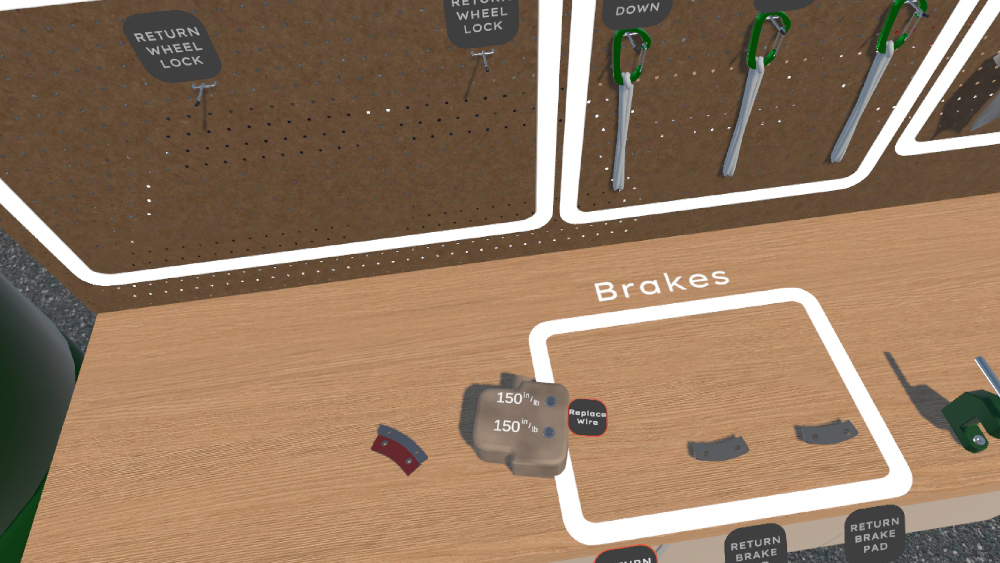
The goal wasn’t perfect one-to-one realism or mechanical precision. It was reducing friction between the user and the experience. Users could reach toward components, grab tools, and interact with the aircraft using natural motions instead of abstract controller inputs.
This allowed users to connect learning to intentional and intuitive movement rather than unfamiliar or passive interaction patterns. Simple interactions became more tactile:
- Reaching instead of aiming with a laser pointer
- Grabbing instead of pressing a button
- Physically moving through procedures instead of selecting actions from menus
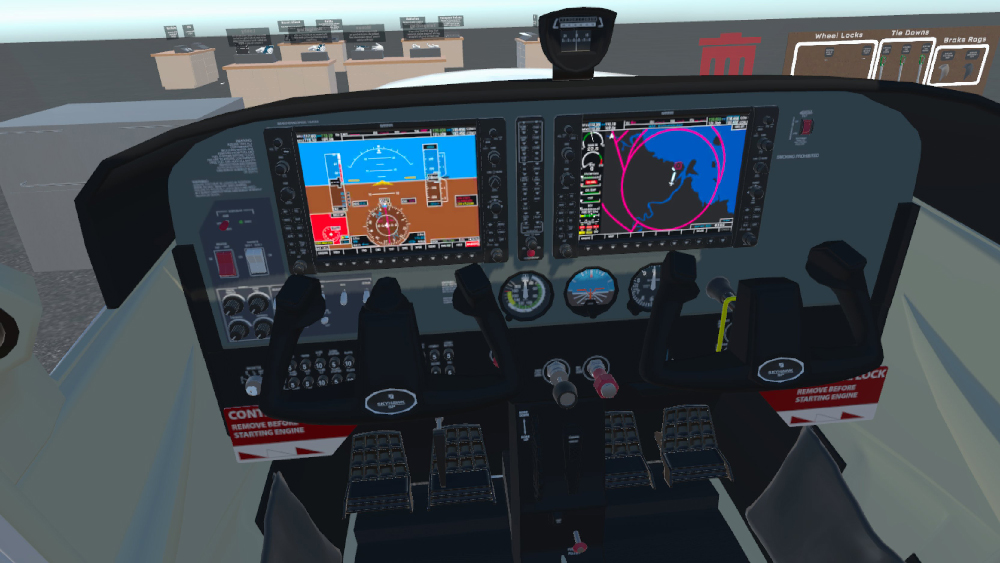
We also avoided forcing users through a completely rigid sequence. Guidance remained available through written instruction, but trainees still had the freedom to explore the aircraft, inspect components, and interact with systems naturally.
Together, these decisions shifted the simulator away from feeling like a guided presentation and closer to an active experience users could relate back to the real world.
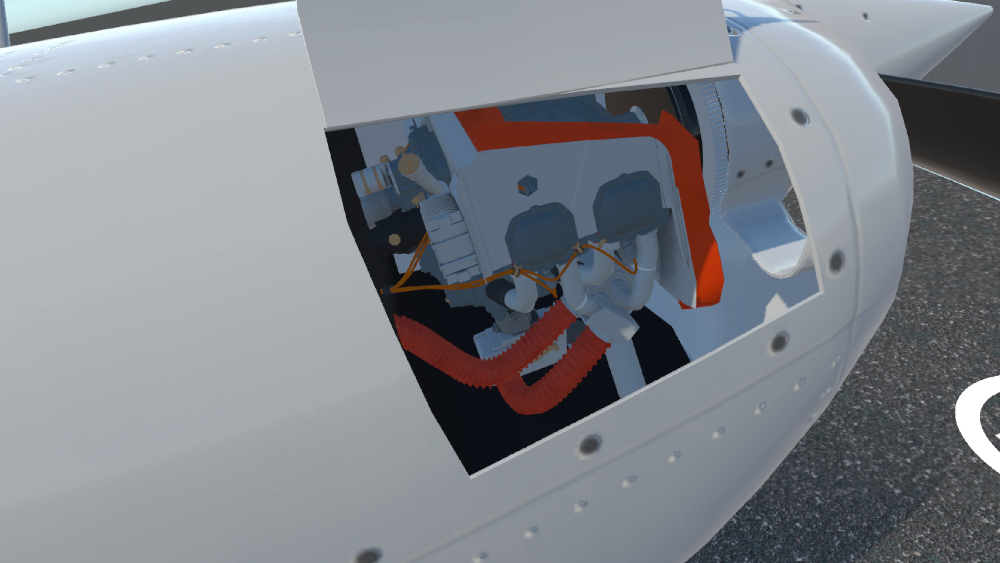
Designing for Engagement Over Perfect Realism
One of the biggest design considerations was deciding where realism actually mattered.
In VR training, it’s easy to invest heavily in visual fidelity or exact mechanical simulation. We found that freedom, combined with simple and intuitive interaction, often had a greater impact on how users experienced the simulator.
Hand tracking introduced moments of physical involvement that changed the tone of the experience. Rather than simply advancing through sequences, trainees were reaching, manipulating, and navigating using their own movements, driven more by intuition and curiosity.
That sense of participation became one of the defining characteristics of the product.
What We Observed
During demos and testing, users consistently responded more strongly to the hand-tracked interactions than any other feature.
Student feedback repeatedly described the experience as:
- More immersive
- More intuitive
- More hands-on
- More fun
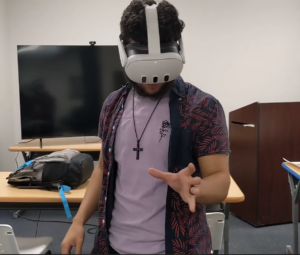
Many trainees specifically called out the interaction model as one of the most memorable parts of the simulator. Users also responded positively to being presented with the full procedural checklist upfront while still being free to explore the aircraft and determine their own flow through the task.
Incorrectly performed steps were reviewed at the end of the experience rather than interrupting the user immediately. Trainees appreciated the less intrusive approach and the ability to review mistakes afterward instead of being constantly corrected during the process.
The level of engagement and involvement suggested that these interaction decisions had a meaningful impact on how students experienced the training.
Key Takeaways
This project reinforced an important design principle for us: effective VR training is not just about recreating reality. It’s about creating approachable, meaningful interaction. By focusing on direct engagement through hand tracking and freedom to explore, we built a simulator that felt more natural, modern, and differentiated from traditional training tools in the industry.
The next phase is expanding the platform with additional learning content for classroom deployment while gathering more structured data around learning outcomes, retention, and long-term usability.